Can A Hammer Drill Be Used On Wood: Safe Tips And Methods
Yes, a hammer drill can drill into wood, but you should use it in standard drill mode, not hammer mode. The hammer setting adds rapid impacts that are useful for brick, concrete, and masonry. In wood, those impacts can cause splintering, rough holes, damaged drill bits, and poor control.
For most wood projects in the United States, a regular drill or cordless drill driver is the better tool. Use a hammer drill only when it is the tool you have, and switch off the hammer function first.
Introduction
For a homeowner in the United States, a hammer drill can seem like a useful all-in-one tool for shelves, cabinets, framing, and repair work. It can drill wood, but its extra impact function is made for hard mineral materials, not soft fiber-based materials such as pine, plywood, or hardwood.
The key choice is simple: use the rotary-only setting for wood. Use the hammer setting only when drilling approved masonry materials and when the drill, bit, and safety gear match that job.

How a Hammer Drill Works
A hammer drill combines two actions:
- Rotation: The chuck spins the drill bit.
- Hammering: The tool adds fast, short impacts along the bit’s length.
The hammer action helps a masonry bit break apart brick, block, concrete, and similar materials. It does not cut wood more cleanly. Wood is best removed by sharp cutting edges that slice through its fibers.
A hammer drill often has a mode selector with symbols such as:
- A drill-bit icon for standard drilling
- A hammer icon for impact drilling
- A clutch or screw symbol for driving fasteners
The exact controls vary by model. Check the owner’s manual before use, especially if the tool has several modes or an SDS chuck.
Hammer drill versus rotary hammer
These tools are related but not identical:
| Tool | Main use | Can it drill wood? | Best setting for wood |
|---|---|---|---|
| Drill driver | Wood, metal, screws | Yes | Drill mode |
| Hammer drill | Wood plus masonry | Yes | Rotary-only mode |
| Rotary hammer | Concrete, brick, stone | Sometimes, with the right attachment | Rotary-only mode, if approved |
| Impact driver | Driving screws and bolts | Limited drilling with rated bits | Use only compatible hex-shank bits |
A hammer drill usually has a standard three-jaw chuck. A rotary hammer often uses an SDS chuck and much greater impact force. A rotary hammer is usually too large and aggressive for ordinary wood drilling unless the manufacturer provides a suitable chuck or bit system and allows rotary-only use.
Can You Use the Hammer Setting on Wood?
You can physically use the hammer setting on wood, but you generally should not. The impacts may push the bit through the material faster, yet the hole will often be less clean and less controlled.
Hammer mode can cause:
- Splintered entry and exit points
- Torn wood fibers
- Oversized or uneven holes
- Burning from excess friction
- A damaged bit or chuck
- Movement of the workpiece
- Damage to the surface behind the wood
The effect depends on the wood and the bit. Soft pine may tear quickly. Plywood can delaminate. Hardwood may resist the bit and heat up. Veneer, laminate, and finished trim can chip or crack around the hole.
A hammer setting may be acceptable only for a rough hole in scrap wood where appearance does not matter. Even then, rotary-only drilling is usually easier to control.
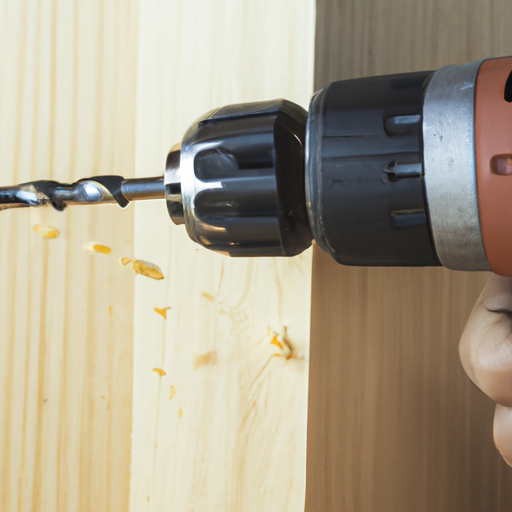
How to Drill Wood With a Hammer Drill
Use these steps when a hammer drill is your available tool.
1. Choose the correct drill bit
Match the bit to the hole and the wood:
- Brad-point bit: Clean starter point and neat holes in many wood types
- Standard twist bit: Small holes and general-purpose work
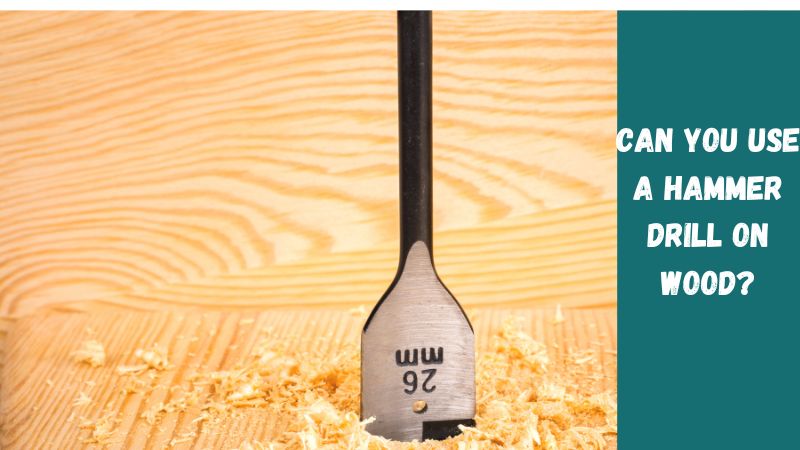
- Spade bit: Fast, wide holes in framing lumber and other rough work
- Auger bit: Deep holes and larger cuts with strong chip removal
- Forstner bit: Clean, flat-bottomed holes
- Hole saw: Large holes for pipes, cables, and fittings
Do not use a masonry bit when you want a clean wood hole. A masonry bit is designed to crush hard material with a blunt carbide tip. It can make a hole in wood, but it usually cuts poorly and may wander.
2. Turn off hammer action
Set the mode selector to the drill symbol. Do not rely only on a low speed or low clutch setting. The impact function must be switched off.
If the tool has no clear rotary-only setting, read the manual before drilling. Some rotary hammers and combination tools work differently from standard hammer drills.
3. Mark the hole
Measure the location and mark it with a pencil. For a clean hole, make a small starter mark with an awl or another pointed tool. This helps the bit stay in place when the drill starts.
When drilling near the edge of a board, leave enough material around the hole. A hole placed too close to an edge can split the wood.
4. Secure the material
Clamp the board or hold it against a stable support. Do not hold a loose board in one hand while drilling with the other.
Place a scrap board beneath the workpiece when drilling through it. The backing board supports the fibers as the bit exits and helps reduce blowout.
5. Start at low speed
Place the bit straight on the mark. Start slowly until the cutting edges form a small recess. Then increase speed as needed.
Keep the drill aligned with the intended hole. Do not force it sideways to correct the angle. Side pressure can bend or break the bit and may damage the chuck.
6. Reduce pressure near the exit
When the bit is close to breaking through, ease off the pressure. This gives the cutting edges time to remove the remaining fibers instead of tearing them away.
For a very clean through-hole, drill from one side until the tip just appears on the back. Then turn the board over and finish from the other side using the small opening as a guide.
7. Clear chips safely
Stop the drill before removing chips or checking the hole. For a deep hole, withdraw the bit from time to time to clear wood chips. An auger bit usually handles chips better than a spade bit.
Never use your fingers while the bit is moving.

What Drill Speed Should You Use on Wood?
The right speed depends on the bit diameter, wood type, and bit design. In general, small bits can run faster than large bits. Large bits create more cutting load and should run more slowly.
Use the tool’s variable-speed trigger rather than immediately running at full speed. Watch for these signs:
- Bit stalls: Use less pressure or a lower gear.
- Smoke or a burnt smell: Stop and let the bit cool. The speed may be too high, the bit may be dull, or chips may be trapped.
- Ragged fibers: Use a sharper wood bit, support the back of the board, or reduce pressure near breakthrough.
- The bit wanders: Start with a small pilot hole or use a brad-point bit.
Some bit packages list speed ranges. Follow those instructions when available. A manufacturer’s speed guidance is more reliable than a single speed rule for every type of wood.
Which Tool Is Best for Drilling Wood?
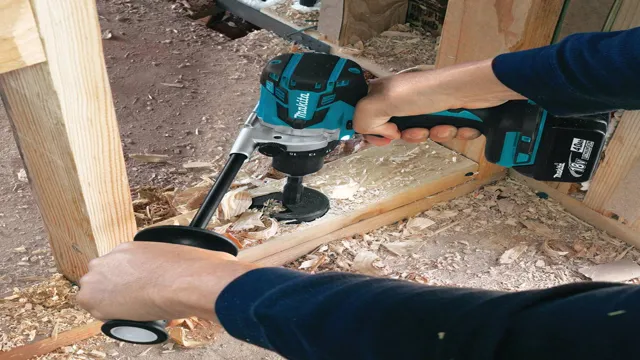
A regular drill driver is usually the best choice for wood because it is lighter, easier to control, and designed for rotary drilling and screw driving. A hammer drill becomes useful when the same project also includes brick, block, or concrete.
Choose based on the work:
| Wood task | Recommended tool or bit |
|---|---|
| Small pilot holes | Drill driver with a twist or brad-point bit |
| Cabinet and furniture holes | Drill driver with a brad-point or Forstner bit |
| Large rough holes | Drill with a spade or auger bit |
| Very large pipe holes | Drill with a hole saw |
| Wood and occasional masonry | Hammer drill with hammer mode switched off for wood |
| Heavy concrete work | Rotary hammer with approved masonry accessories |
A hammer drill is not automatically better because it has more power. Extra impact force is helpful only when the material needs it.
Can You Use a Masonry Bit on Wood?
A masonry bit can make a hole in wood, but it is not the right choice for most woodwork. Its tip is made to wear against masonry rather than slice wood fibers.
You may get a usable rough hole in a piece of framing lumber. However, expect more wandering, tearing, and heat than you would get with a wood bit. The hole may also be less accurate.
Use a wood bit whenever the hole’s size, shape, or appearance matters. Reserve masonry bits for concrete, brick, block, stone, and other materials listed by the bit maker.
Can You Use a Wood Bit in Hammer Mode?
Do not use an ordinary wood bit in hammer mode unless the bit manufacturer specifically rates it for impact use. Standard wood bits are not built for repeated axial impacts.
Possible results include:
- A bent or broken bit
- A damaged cutting edge
- A loose or damaged chuck
- A bit that slips in the material
- Loss of control
The same rule applies to hole saws, Forstner bits, and many specialty cutters. Read the bit’s instructions and use only accessories approved for the selected tool mode.
Safety Rules for Drilling Wood
Wood drilling is less demanding than concrete drilling, but a spinning bit can still cause serious injury. Follow the tool manual and these basic precautions:
- Wear safety glasses or a face shield rated for the task.
- Secure the workpiece before drilling.
- Remove the battery or unplug the tool before changing bits.
- Keep hands, hair, loose clothing, and cords away from the chuck and bit.
- Check both sides of the material before drilling.
- Look for hidden wires, plumbing, nails, screws, and metal plates.
- Use dust control when cutting treated wood, composite board, or large amounts of material.
- Do not wear loose gloves near rotating parts.
- Let the bit cool before touching it.
- Keep the drill’s side handle installed when the manual requires it.
- Use the correct battery, charger, guard, and accessory for the tool.
In the United States, hidden electrical wiring is a real concern in walls and ceilings. If you are drilling into installed framing, first identify the likely path of cables and pipes. Stop if the bit hits metal or if the task involves uncertain wiring, plumbing, or structural members.
The Occupational Safety and Health Administration provides general woodworking safety requirements for workplaces. Home users should also follow the safety instructions supplied with the specific drill and bit.

Common Problems and Fixes
The hole is rough or splintered
Turn off hammer mode. Switch to a sharp brad-point bit or another bit made for wood. Support the back of the material and slow down as the bit exits.
The drill bit keeps slipping
Remove the bit and inspect the chuck. Insert the bit fully and tighten the chuck according to the tool instructions. A damaged or dirty chuck may not grip well.
The bit gets hot
Stop drilling and let it cool. Use a sharper bit, reduce pressure, clear chips, or select a lower speed for a larger bit. Do not pour water on a hot bit or tool.
The drill stops under load
The bit may be too large, dull, or clogged. Use a pilot hole, a lower gear, less pressure, or a bit suited to the material. If the battery tool shuts down repeatedly, let the battery and motor cool.
The wood splits
Move the hole farther from the edge, clamp the board, and use a pilot hole. For through-holes, add a backing board or drill from both sides.
The bit catches suddenly
Large bits can grab when they break through or hit a knot. Use the side handle, keep both hands on the drill when needed, and clamp the workpiece. Reduce pressure as the bit nears the far surface.
When Should You Not Use a Hammer Drill on Wood?
Choose another setup when the work needs a clean finish, tight tolerances, or many repeated holes. A drill press is better for straight, repeatable holes in a workshop. A compact drill driver is often better for furniture assembly and overhead work.
Do not use a hammer drill on wood when:
- You cannot switch off the impact function.
- You only have a masonry bit but need a clean finished hole.
- The material is thin veneer or delicate laminate.
- The drill is too heavy to control safely.
- The bit is not rated for the selected mode.
- The workpiece cannot be clamped securely.
- The project involves hidden utilities that you cannot identify.
A tool can be capable of a task without being the best tool for it. In this case, the rotary function does the useful work; the hammer function usually adds risk without improving the result.
Frequently Asked Questions
Can a cordless hammer drill drill through wood?
Yes. Set it to rotary-only mode and use a sharp bit designed for wood. Battery voltage does not change the basic rule: keep the hammer function off.
Can a hammer drill be used as a regular drill?
Most hammer drills can be used as regular drills when the mode selector allows rotary-only operation. Check the manual because controls and functions differ by model.
Is a hammer drill too powerful for wood?
Not necessarily. Power is not the main problem. The important factors are speed, pressure, bit choice, and whether the impact function is active. Use a clutch or lower gear when driving screws or working with delicate material.
Can a hammer drill make clean holes in plywood?
Yes, if you use rotary-only mode, a sharp wood bit, and a backing board. Plywood can chip or delaminate, so support the exit side and reduce pressure near breakthrough.
Can a rotary hammer drill wood?
Sometimes, but only with the correct chuck or accessory and only in a manufacturer-approved rotary-only mode. A rotary hammer is usually excessive for small wood holes. Do not put an ordinary wood bit into an SDS chuck unless the required adapter and bit are approved for that tool.
Final Recommendation
A hammer drill can be used on wood, but use it like a standard drill: select rotary-only mode, install a wood-rated bit, secure the material, and control the speed. Do not use the hammer setting with ordinary wood bits.
If you often drill wood, a drill driver is usually the more comfortable and precise choice. If you drill both wood and masonry, a hammer drill can cover both tasks as long as you use the correct mode and accessory for each material.
Recent Tool Guides
 Hammer
How To Hammer Flowers Onto Paper: Easy Guide
Learn how to hammer flowers onto paper with simple steps, helpful tips, and beautiful results for...
Read Guide → Wrench
How To Use A Hex Wrench: Easy Step-By-Step Guide
Learn how to use a hex wrench correctly with simple steps, helpful tips, and common mistakes...
Read Guide → Hacksaw
How To Cut Curtain Pole With Hacksaw: Easy Guide
Learn how to cut curtain pole with hacksaw safely and neatly. Follow simple steps for accurate...
Read Guide → Wrench
How To Use A Husky Torque Wrench: Easy Guide
Learn how to use a Husky torque wrench correctly with simple steps, torque settings, and safety...
Read Guide → Hammer
How To Hold A Hammer: Safe Grip Guide
Learn how to hold a hammer with the right grip, stance, and technique for safer, more...
Read Guide → Hacksaw
How To Cut Flexible Metal Conduit With Hacksaw: Easy Guide
Learn how to cut flexible metal conduit with hacksaw safely and cleanly. Follow simple steps for...
Read Guide →