

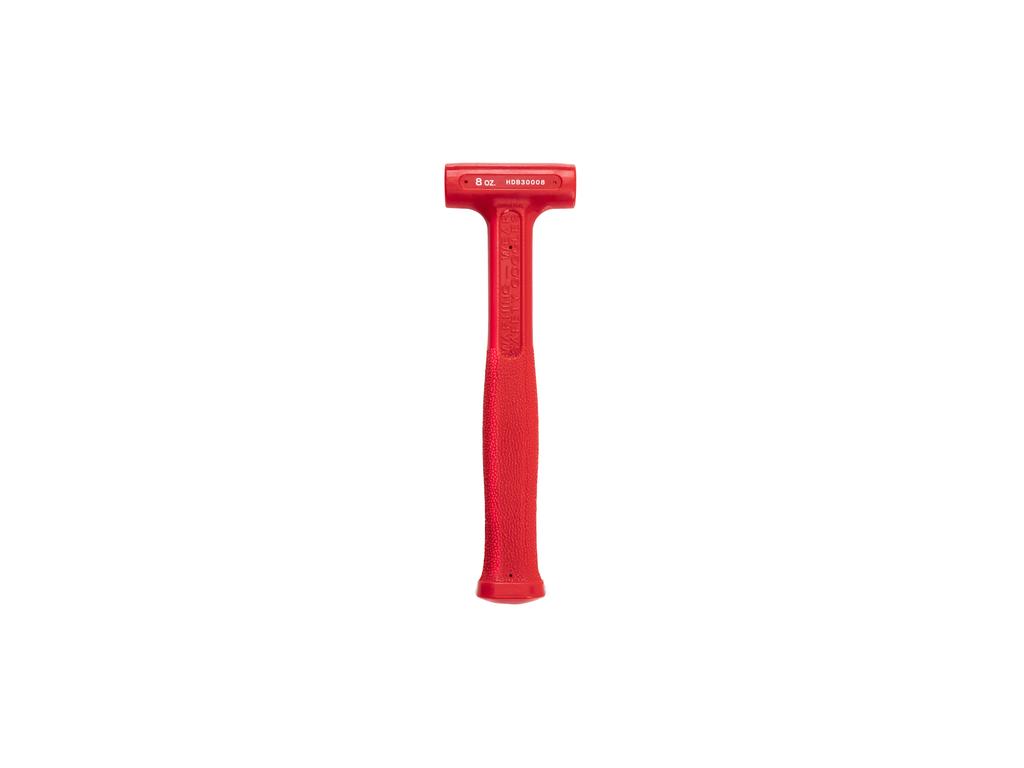
A dead blow hammer is usually made of a hollow metal or tough plastic head filled with loose shot, such as steel or sand. Its striking faces are often made of rubber, urethane, nylon, or another soft material. The handle may be steel, fiberglass, or wood.
In the United States, mechanics, woodworkers, machinists, and home repair workers use dead blow hammers when they need a firm hit with less bounce and less damage to the work surface. The loose filling moves inside the head after impact. This absorbs much of the rebound and helps transfer force into the object.

What parts make up a dead blow hammer?
A dead blow hammer has four main parts:
- The outer head
- The internal filling
- The striking faces
- The handle
Each part affects how the hammer feels, how much force it delivers, and what materials it can safely strike.
The outer head
The head is often made from one of these materials:
- Forged or cast steel
- Stainless steel
- Aluminum
- High-impact plastic
- Reinforced nylon
- A mix of metal and plastic
Steel heads are common in heavy-duty tools. They resist wear and can deliver strong blows. Aluminum heads are lighter and may reduce hand fatigue. Plastic heads are useful when the tool must not mark delicate parts.
Some dead blow hammers have a steel core covered by a plastic jacket. This design gives the tool a strong inner body and a softer outer surface.
The internal filling
The hollow head contains loose material. This material is what gives the hammer its “dead blow” action.
Common fillings include:
- Steel shot
- Lead shot
- Copper shot
- Sand
- Small metal pellets
- Plastic pellets
Steel shot is common because it is dense and durable. A small amount can add useful weight without making the head very large. Sand is less dense, but it can help reduce rebound in some lighter hammers.
Lead was used in some older or specialty designs because it is very dense. However, lead has health and disposal concerns. You should not open or cut into a dead blow hammer unless the manufacturer gives clear repair instructions. The filling may also spill into the work area.
The striking faces
The face is the part that touches the work. Many dead blow hammers have replaceable faces.
Common face materials include:
- Urethane
- Rubber
- Nylon
- PVC
- Copper
- Brass
- Steel
Soft urethane and rubber faces help protect painted, polished, or finished surfaces. Nylon faces are harder and may last longer when the hammer must move tight parts.
Some hammers have different faces on each side. One side may be soft for delicate work. The other may be harder for more forceful impacts.
The handle
The handle may be made from:
- Forged steel
- Fiberglass
- Hickory or another hardwood
- Reinforced plastic
- Steel with a rubber grip
A steel handle gives the hammer a solid feel. Fiberglass handles can reduce some vibration and do not splinter like damaged wood. Wood handles can feel comfortable, but they need inspection for cracks, looseness, and swelling.
The handle and head should form one secure assembly. A loose head is dangerous, even if the hammer looks clean.

How does a dead blow hammer work?
A dead blow hammer works by moving its internal filling at the moment of impact. The filling shifts inside the hollow head and absorbs part of the energy that would otherwise make the hammer bounce back.
A normal steel hammer often rebounds from a hard surface. That rebound can make the tool harder to control. A dead blow hammer has less bounce, so more of the strike stays in the work.
The loose filling also delays the return of energy. This helps the hammer push against the part instead of springing away at once.
For example, a mechanic may use a dead blow hammer to seat a bearing or loosen a stuck part. The hammer can apply a strong blow while reducing the chance of a sharp rebound.
The term “dead blow” does not mean the hammer has no rebound. It means the rebound is greatly reduced compared with a solid hammer of similar size. The result depends on the hammer’s weight, filling, face material, and the surface being struck.
Why the filling matters
The filling changes the hammer’s balance and impact behavior.
| Filling | Main trait | Typical effect |
|---|---|---|
| Steel shot | Dense and durable | Strong impact in a compact head |
| Sand | Light and easy to contain | Lower weight and reduced rebound |
| Copper shot | Dense and softer than steel | Useful in some non-sparking or soft-contact designs |
| Lead shot | Very dense | Heavy head, but possible health concerns |
| Plastic pellets | Light and quiet | Lower impact strength and less noise |
These are general material traits. The exact result depends on the tool’s design. A hammer with a heavy steel body and steel shot may hit much harder than a light plastic hammer filled with sand.
Why dead blow hammers feel different
A dead blow hammer often feels slower than a solid steel hammer. That is normal. The internal shot moves after the face contacts the work.
This movement can make the blow feel softer in your hand while still delivering useful force to the part. The tool may also produce less sharp ringing when its face has a rubber or urethane cover.
What is a dead blow hammer head made of?
Most dead blow hammer heads are made from steel, aluminum, or impact-resistant plastic. Many use a layered design rather than one material.
A typical heavy-duty hammer may contain:
- A steel or aluminum body
- An enclosed chamber
- Loose steel shot inside the chamber
- A rubber, urethane, or nylon outer face
Some models use a metal head with molded plastic around it. Others use a plastic body with a metal weight inside.
The head must contain the filling securely. If the chamber cracks, the shot can escape. The hammer may then lose its dead blow effect and become unsafe to use.
Do not assume that a plastic head is weak. Some engineering plastics can withstand repeated impact. Still, plastic can split if exposed to heat, chemicals, sharp edges, or blows outside its intended use.
Are dead blow hammers always non-marring?
No. A dead blow hammer is not automatically non-marring.
“Dead blow” describes the hammer’s reduced rebound. “Non-marring” describes the chance of leaving a mark on the work. These are different features.
A dead blow hammer with a steel face may mark soft metal. A hammer with a urethane face is less likely to leave a mark, but it can still damage paint, plastic, or polished surfaces if the blow is too strong.
Before striking a visible or finished part, check:
- The face material
- The condition of the face
- The hardness of the workpiece
- The force needed
- Any instructions from the part maker
A damaged face can expose a hard inner surface. Replace the face or remove the hammer from service if you see cracks, deep cuts, missing sections, or exposed metal.

What are dead blow hammer faces made of?
Dead blow hammer faces are commonly made of urethane, rubber, nylon, copper, brass, or steel.
Urethane faces
Urethane faces are common on general-purpose dead blow hammers. They can protect many finished surfaces while resisting wear better than some soft rubber faces.
They are not suitable for every chemical or temperature. Oils, solvents, heat, and sharp edges may shorten their life.
Rubber faces
Rubber faces are soft and useful for light assembly work. They can reduce marks and noise. They may wear faster than nylon or urethane, especially on rough parts.
Nylon faces
Nylon faces are harder than rubber. They can deliver a sharper blow while still being less likely to mark some metal parts than bare steel.
Nylon can crack under severe impact or extreme cold. Inspect it before use.
Copper and brass faces
Copper and brass faces are used when a softer metal contact is needed. They can help reduce damage to steel parts, but they may leave their own metal residue or marks.
Copper and brass are not the same as non-sparking in every work setting. If an explosive or flammable atmosphere is present, use only a tool that is specifically approved for that environment and task.
Steel faces
Steel faces provide high impact strength. They are useful for rugged work, but they can damage softer parts, finished surfaces, and precision components.
A steel-faced dead blow hammer still has reduced rebound. It does not become a soft or non-marring tool.
Is a dead blow hammer safer than a regular hammer?
A dead blow hammer can reduce rebound and improve control, but it is not risk-free. The best choice depends on the work and the hammer’s condition.
A dead blow hammer may help when:
- You need to seat a part without a sharp bounce
- You want to reduce surface damage
- You work near finished metal
- You need controlled impact in a tight space
- You want less ringing than a bare steel hammer may produce
It may be the wrong tool when:
- You need to split, cut, or drive hardened steel
- The work requires a striking face harder than the part
- The hammer is too light for the job
- The face is damaged
- The manufacturer forbids striking the tool with another hammer
Wear safety glasses. Keep your fingers away from the impact zone. Make sure the work is supported. Never strike a dead blow hammer with another hammer unless the manufacturer clearly allows it.
Also, never use a dead blow hammer as a pry bar. Side loading can damage the handle or head.

How do you choose the right dead blow hammer material?
Choose the hammer based on the workpiece, required force, and risk of surface damage.
| Job | Often suitable | Main caution |
|---|---|---|
| Seating a bearing | Nylon or urethane face | Use the correct driver or adapter when possible |
| Adjusting machinery | Urethane or rubber face | Avoid damaging precision surfaces |
| Automotive repair | Medium or heavy dead blow hammer | Confirm that the face will not damage the part |
| Wood assembly | Rubber or urethane face | Test on scrap wood first |
| Moving sheet metal | Soft face | Too much force can dent the panel |
| Heavy metal work | Steel or hard nylon face | Protect finished surfaces |
| Delicate finished parts | Soft urethane or rubber | Even soft faces can leave marks |
The hammer’s weight also matters. A heavier head delivers more energy, but it may be harder to control. A lighter hammer is easier to guide but may tempt you to use repeated blows or excessive force.
When possible, use the lightest hammer that can complete the job without extreme effort.
How can you tell if a dead blow hammer is worn out?
Replace or remove a dead blow hammer from service if you find:
- A loose head
- A cracked handle
- A split or bulging head
- Missing face material
- Exposed internal metal
- A leaking or rattling chamber
- Deep cuts in the striking face
- Severe mushrooming or deformation
- Damage caused by chemicals or heat
A small amount of sound from the internal shot is normal. A sudden change in sound, balance, or impact feel may indicate internal damage.
Do not repair a sealed head by drilling, welding, or cutting it open. The process can release the filling and weaken the head. Follow the maker’s replacement instructions, especially when the hammer has replaceable faces.
Dead blow hammer vs. rubber mallet: What is the difference?
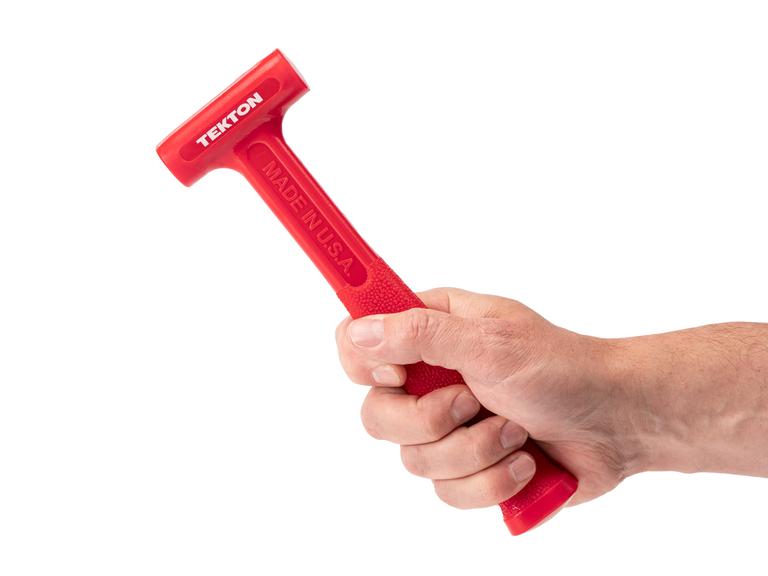
A dead blow hammer contains loose filling inside its head. A rubber mallet usually has a solid or molded rubber head without loose shot.
A dead blow hammer often gives better control and a stronger, more focused impact. A rubber mallet may be softer and better for light assembly or surface protection.
The names can overlap in product listings. Some tools look like mallets but contain steel shot. Others have soft heads but no internal filling. Check the product description or manufacturer’s design details if the difference matters.
Frequently asked questions
Can you use a dead blow hammer on metal?
Yes, if the face and hammer weight suit the metal part. Use a soft face for finished or soft metal. Use a steel face only when marks and dents are acceptable.
Do dead blow hammers contain lead?
Some older or specialty tools may contain lead shot, but many modern tools use steel shot or other materials. Do not cut open a sealed hammer to find out. Check the manufacturer’s documentation.
Why does my dead blow hammer make a rattling sound?
The rattle usually comes from the loose shot inside the head. That sound is part of the design. A new crack, leak, bulge, or change in balance is not normal.
Can a dead blow hammer break?
Yes. The head, handle, face, or internal chamber can fail. Excessive force, heat, chemicals, side loading, and striking unsuitable materials can cause damage.
Can you replace the face on a dead blow hammer?
Some models have replaceable faces. Others are sealed and cannot be repaired. Use only the face type and installation method approved by the manufacturer.
Key points to remember
A dead blow hammer is usually made from a hollow metal or impact-resistant plastic head, loose internal shot, a replaceable or molded striking face, and a steel, fiberglass, plastic, or wood handle.
The internal shot reduces rebound. It does not make every dead blow hammer non-marring. Face material still determines how likely the tool is to mark the work.
For safe use, match the face and weight to the job, inspect the tool before each use, wear eye protection, and replace it when the head, handle, chamber, or face shows damage.
Sources and further reading
The material and construction details in this guide were checked against manufacturer information and occupational safety guidance, including:
- Snap-on Tools — Dead Blow Hammers
- PROTO Industrial Tools — Dead Blow Hammers
- TEKTON — Dead Blow Hammers
- Estwing — Hammers and striking tools
- OSHA — Hand and Power Tools
Conclusion
A dead blow hammer is made to control impact. Its hollow head holds loose shot, while its outer face protects the work to a greater or lesser degree. Steel, aluminum, plastic, rubber, urethane, nylon, and fiberglass may all appear in one tool.
The best hammer is not simply the heaviest one. Choose the face material, head weight, and handle design that fit the part in front of you. When in doubt, start with a lighter hammer and a softer face, then inspect both the tool and the work after each strike.